
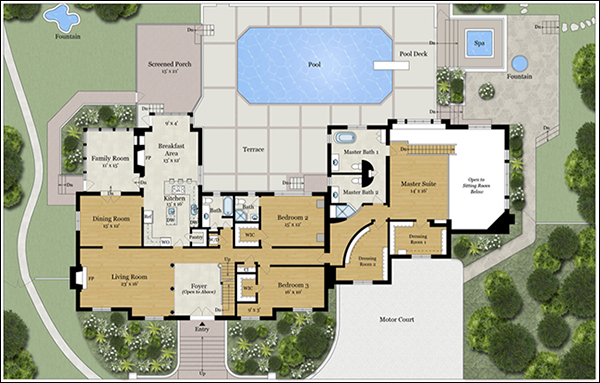
Understanding Drafting Services
Drafting services play a crucial role in the visualization of ideas and concepts, serving as a foundational element in various industries, including architecture, engineering, and design. These services involve the creation of detailed representations of objects or structures, either in two dimensions (2D) or three dimensions (3D). The primary aim of drafting is to convey design intentions clearly and accurately, enabling professionals to communicate their visions effectively to clients and stakeholders.
2D drafting primarily focuses on flat representations, allowing designers and architects to create floor plans, elevations, and sections that serve as the blueprint for a project. It involves traditional manual drafting methods as well as advanced computer-aided drafting (CAD) techniques, such as using AutoCAD software. In contrast, 3D drafting provides a more comprehensive view, illustrating the depth, volume, and spatial relationships of design elements. This method is particularly beneficial when presenting concepts to clients who may struggle to visualize a project from a 2D representation.
The significance of effective drafting cannot be overstated; it is fundamental to ensuring accuracy, efficiency, and quality in project execution. In architecture, for instance, drafting is essential for developing architectural designs that adhere to code requirements while meeting aesthetic intentions. Similarly, in engineering, precise drafting aids in the creation of functional components for manufacturing processes. Furthermore, the evolution from manual drafting to digital drafting has transformed the drafting landscape, providing greater precision and flexibility. Digital tools allow for rapid modifications, better collaboration among teams, and enhanced visualization techniques that were previously unavailable.
Ultimately, understanding the intricacies of drafting services—both 2D and 3D—is essential for professionals in any design-related field. Through effective drafting practices, these individuals can transform their ideas into reality, ensuring that their projects are executed to the highest standards.
From Concept to Creation: The Drafting Process
The process of transforming a conceptual idea into a detailed draft involves several critical stages that ensure precision and clarity in the final output. Initially, the drafting process begins with a comprehensive consultation between the client and the drafting professional. This meeting is essential for gathering information, understanding the client’s vision, and clarifying expectations. During this phase, professionals listen attentively to the client’s ideas and objectives, which serve as the foundation for the drafting project.
Once the initial ideas are collected, the next step is to develop these concepts further into drafts. This involves employing a combination of creativity and technical skills to create a visual representation of the client’s vision. Drafting professionals utilize advanced tools and software, such as AutoCAD, SketchUp, and Revit, to produce accurate 2D and 3D models that reflect the client’s expectations. These digital platforms allow for a high level of detail and facilitate revisions, making the drafting process more efficient and adaptable.
Throughout this phase, feedback from the client is paramount. The interaction between the drafting professional and the client fosters a collaborative environment where ideas can be iterated upon and refined. Clients are encouraged to review drafts regularly and provide input, which helps eliminate misunderstandings and ensures that the final drafts align with their vision. This dynamic exchange not only enhances the quality of the designs but also strengthens the relationship between the client and the drafting team.
In conclusion, the drafting process is a multi-step journey that transforms initial ideas into precise drafts through effective communication, modern tools, and continuous feedback. By engaging in this collaborative workflow, clients can ensure that the final product meets their expectations and successfully brings their original concepts to fruition.
Benefits of 2D and 3D Drafting
Utilizing 2D and 3D drafting services brings significant advantages across various fields, including architecture, engineering, and product design. One of the primary benefits of 3D drafting is its ability to provide a more tangible and realistic representation of concepts, enabling clients and stakeholders to visualize the final outcome with clarity. This three-dimensional approach allows for enhanced understanding of spatial relationships, textures, and forms, which can be especially useful during the design review phases. For instance, clients can better grasp the intricacies of a building project or a product prototype, making it easier to identify potential issues or modifications before construction or production begins.
Moreover, 2D drafting still plays a crucial role in conveying clear and precise information. While it may not provide the same depth as 3D models, 2D drawings simplify complex ideas into easily interpretable formats, such as floor plans and schematics. These representations are essential for communicating technical details to manufacturers, contractors, or other professionals involved in the project. The clarity offered by 2D drafts ensures that everyone has a shared understanding of the project requirements and specifications.
In practical applications, the use of 2D and 3D drafting services can be seen in various industries. For example, in the construction sector, architects utilize these drafting techniques to create detailed plans that help visualize everything from the foundation to the roof design. In product design, engineers often rely on 3D models to simulate how a product will function in a real-world context, while 2D technical drawings are used for manufacturing processes. Ultimately, both 2D and 3D drafting services are indispensable tools that streamline workflows, reduce errors, and enhance overall project efficiency.
Bridging Ideas to Reality: Examples of Our Work
At our drafting service, we pride ourselves on our ability to transform nascent ideas into tangible designs. Through a rich portfolio of past projects, we showcase our commitment to delivering high-quality 2D and 3D drafting solutions tailored to meet the unique needs of our clients. One notable example includes the conversion of traditional hand-drawn sketches into precise digital AutoCAD drafts. This process not only preserves the integrity of the original concept but also introduces enhanced accuracy and structural integrity that can be further utilized in construction or manufacturing.
Our collaboration with a prominent architectural firm illustrates this transformation effectively. Initially, the clients provided us with rough sketches and handwritten annotations. We meticulously recalibrated these outlines into detailed, executable drawings, utilizing advanced AutoCAD tools. This project not only emphasized our drafting capabilities but also reflected our methodical approach to capturing our clients’ vision, ensuring that every detail was accounted for before progression to the building phase.
In addition to drafting services for established concepts, we excel at crafting original designs from scratch. A recent case involved a startup looking to create an innovative product for urban living. Through brainstorming sessions, we developed a series of digital models that conveyed the product’s functionality and aesthetic appeal. Thanks to our 3D drafting expertise, we presented the client with realistic visualizations that were instrumental in obtaining necessary approvals and funding.
In all our projects, client satisfaction remains our foremost priority. Our dedication to transforming ideas into reality is consistently reflected in the positive feedback we receive. Each of these examples underscores our effectiveness in turning creative visions into detailed, precise drafts, building trust with our clients and setting a benchmark for quality in the drafting industry.

For Drafting Services
Request a Quote
(Kindly provide as many details as you can and upload any relevant files that can assist with your project.)